
July 11, 2026
I plan nearly every outdoor session around this window of light. After over 20 years shooting engagements and weddings across Florida, here's what golden hour actually is and why it makes such a visible difference in your photos.
Golden hour refers to the period shortly after sunrise and shortly before sunset when the sun sits low on the horizon. At that angle, sunlight travels through more of the atmosphere before reaching the ground, which scatters the blue wavelengths of light and lets the warmer red and orange wavelengths dominate.
The result is soft, warm, low-contrast light that flatters skin tones and reduces harsh shadows, which is exactly why photographers build entire sessions around catching it.
The technical name for this is a lower color temperature, measured in kelvin, and it's the same physics that makes a sunrise or sunset sky glow orange and pink instead of the pale blue of midday. That same warm cast falls across everything in the frame, including your subjects.
Photographers sometimes call this same effect 'the golden light' or simply 'sunset light,' but the underlying physics is identical regardless of which term gets used.
Photographers sometimes call this same effect 'the golden light' or simply 'sunset light,' but the underlying physics is identical regardless of which term gets used.
During midday, the sun sits high overhead and creates hard shadows under eyes and noses, along with squinting from direct glare. During golden hour, the low sun angle wraps light around a subject more evenly and creates a natural backlight or rim light effect that midday sun simply cannot produce.
That warm color temperature also does a lot of the work that would otherwise require heavy editing. Skin tones look naturally warm and even, and skies pick up color instead of a flat, washed-out white.
Positioning the sun behind your subjects during golden hour creates a soft halo of light around hair and shoulders, an effect experienced photographers actively look for rather than avoid, since it's one of the most requested looks in engagement and wedding photography.
The angle also changes how shadows fall across a face. At midday, shadows fall straight down and pool under the eyes. At golden hour, the low angle casts shadows sideways instead, which reads as far more flattering in a still photograph.
Golden hour shifts throughout the year, and Florida's relatively consistent latitude means the shift is less dramatic than in northern states, but it still matters. In summer, golden hour in South Florida often falls between roughly 7:00 and 8:00 p.m. In winter, it can start as early as 5:00 p.m.
I check exact sunset times for the specific date and location before every outdoor session, since a 20-minute miscalculation can mean the difference between soft golden light and flat blue-hour shadow.
Coastal locations add another variable: cloud cover out over the water can either intensify sunset color dramatically or block it entirely, so I keep an eye on the marine forecast in the days leading up to a beach session, not just the general weather app.
There are several free sunset calculator tools and apps that give exact golden hour windows for any date and coordinates. I use one during every planning call so a couple can see their specific window rather than a generic estimate.
A session scheduled for 1 p.m. in Florida will produce harsher shadows and more squinting, no matter how skilled the photographer is. Open shade and creative positioning can reduce the impact, but they can't fully replicate golden hour's natural softness.
If your schedule genuinely can't accommodate golden hour, ask your photographer about shooting in fully shaded areas, using structures for open shade, or leaning into a more editorial, high-contrast style that works with harsher light rather than fighting it.
I've photographed plenty of strong midday sessions by finding open shade under trees or building overhangs, which softens the light considerably even without golden hour's warm color. It's not a full substitute, but it's a workable one when timing is out of your control.
A wide-brim hat or handheld reflector can also help control harsh midday shadows in a pinch, tools I sometimes bring specifically for sessions that can't be scheduled around golden hour due to guest travel or venue availability.
Facing your subjects away from the sun and using a nearby wall or building to bounce soft, indirect light back onto them is another practical fix that experienced photographers use when a midday slot can't be avoided.
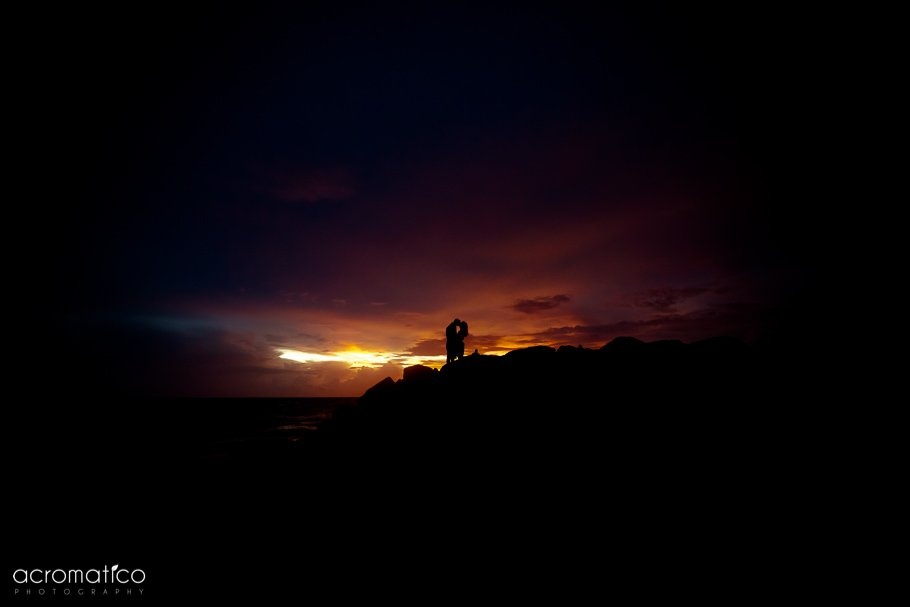
Blue hour is the short window immediately after sunset, when the sun has dropped below the horizon but the sky still holds soft, cool, ambient light. It's shorter than golden hour, often just 15 to 20 minutes, but it produces a distinctly different mood: cooler tones, dramatic skies, and beautiful silhouette opportunities.
Many of my favorite reception exit and evening portrait images come from this window, which couples often don't know to ask for until they see the results.
Because blue hour is so brief, it takes advance planning rather than improvisation. I position couples and set exposure before the window arrives, so we're not wasting any of those fifteen minutes figuring out logistics instead of shooting.
Blue hour photographs pair especially well with string lights, string bulbs, or a lit-up venue in the background, since the ambient light and any artificial light sources balance more evenly than they would against a bright daytime sky.
For engagement sessions, I recommend starting about 90 minutes before sunset. That gives enough time for a few different locations or outfit changes before the light gets truly golden, plus a buffer to keep shooting into blue hour if the couple wants that mood as well.
For weddings, build golden hour into the timeline deliberately, whether that means scheduling the ceremony earlier to leave a couples-portrait window before dinner, or planning a brief sunset break during the reception.
I always share a written timeline with exact sunset time and recommended portrait windows during the planning process, so it's not something anyone has to think about or calculate on the actual day.
I also build in a five to ten minute buffer between each planned segment of a session, since moving locations, adjusting an outfit, or simply catching your breath all take longer in practice than they do on paper.
I also build in a five to ten minute buffer between each planned segment of a session, since moving locations, adjusting an outfit, or simply catching your breath all take longer in practice than they do on paper.
Florida weather can turn a clear golden hour plan into an overcast one with little warning, especially during summer storm season. An experienced photographer will have backup locations with good open shade or covered areas ready regardless of what the sky does.
Overcast skies aren't a total loss for photography either; they act like a giant natural diffuser and produce very soft, even light, just without the warm color cast golden hour provides.
I keep a running list of covered, well-lit backup locations near popular Florida session spots specifically for this reason, so a sudden afternoon storm doesn't mean losing the session entirely.
Let's create images at your venue — Fort Lauderdale, Miami, or wherever your story lives — that you'll be proud to pass down for generations. Reach out and let's see if we're the right fit.
View our photographyIt shifts seasonally, but it's generally the hour before sunset and the hour after sunrise; in summer that often falls between 7:00 and 8:00 p.m.
Yes, with the right positioning and open shade, but golden hour remains the most forgiving and flattering natural light available outdoors.
Yes, it refers to the same warm, low-angle sunlight; some photographers also use the term golden hour interchangeably with sunset light.